The Arab World: Competing Powers, National Ambitions, and Fragmentation
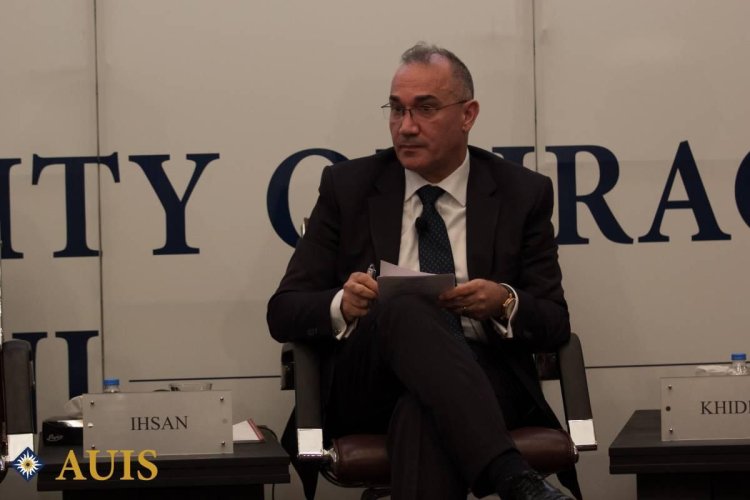
By Professor Mohamed Ehsan
Secretary-General of the Afro-Asian Peoples’ Solidarity Organization
The Arab world has perhaps never appeared as politically fragmented as it does today. From the Gulf to North Africa, and from Iraq and Syria to Yemen, Sudan, Lebanon, and Palestine, Arab states are increasingly operating according to separate strategic calculations rather than a shared regional vision. They share a common language, a broad cultural history, and many security concerns, yet they have failed to transform these commonalities into meaningful political unity.
The central question is not simply: Why do Arab states disagree? Disagreement among states is natural. The deeper question is: Why do disagreements among Arab states so often develop into strategic rivalries, proxy conflicts, and competing relationships with external powers?
Part of the answer lies in the fact that there is no longer a single Arab political center capable of defining the region’s priorities. Egypt once played this role to a considerable extent. Saudi Arabia possesses enormous economic, religious, and political influence. Iraq historically carried considerable political and military weight, while Syria was an important player in Arab affairs. Today, however, influence is distributed among several competing capitals, each seeking to advance its own definition of regional influence.
This fragmentation is particularly evident in the Gulf.
The Gulf states cooperate closely on many issues, yet they do not share a single vision for the region. Saudi Arabia, the United Arab Emirates, Qatar, Kuwait, Bahrain, and Oman each have their own security calculations, economic priorities, and foreign-policy strategies. Their positions on Iran, political Islam, Israel, Yemen, energy, Turkey, and the major global powers are not always identical.
The relationship between Saudi Arabia and the United Arab Emirates illustrates this reality. Riyadh and Abu Dhabi remain important partners and share many strategic interests, yet they also compete for influence, economic leadership, and regional prominence. Their differing approaches to Yemen and other regional conflicts demonstrate that even two of the Arab Gulf’s most powerful states can hold significantly different visions of what the regional Arab order should look like.
Qatar represents another model. Doha has built its influence through wealth, diplomacy, international relations, and mediation. Its willingness to maintain relations with actors regarded as unacceptable by other Arab governments has repeatedly brought it into conflict with some of its neighbors. The Gulf crisis that began in 2017 demonstrated just how deep these differences could be. Although the confrontation later ended, the underlying differences among Gulf capitals did not disappear.
Oman, meanwhile, has historically pursued a different path, emphasizing neutrality and mediation. Kuwait has often favored diplomacy and regional stability. Bahrain remains closely aligned with Saudi Arabia and depends heavily on external security partnerships. The result is a Gulf that is institutionally interconnected but strategically diverse.
Beyond the Gulf, fragmentation becomes even more apparent.
Iraq remains caught between its Arab identity, its relationship with Iran, and American influence. Syria has spent years at the heart of regional rivalries. Lebanon continues to suffer from internal political divisions and the considerable influence of Hezbollah. Yemen has become one of the clearest examples of how an internal conflict can turn into an arena for competing regional agendas. Sudan has likewise demonstrated that competition among Arab powers can extend deep into Africa.
North Africa has its own divisions. Algeria and Morocco remain locked in a long-standing strategic rivalry. Libya continues to suffer from the existence of competing political and military centers. Egypt, meanwhile, faces simultaneous challenges related to Libya, Sudan, Gaza, the Red Sea, and domestic economic pressures. Morocco, Algeria, Tunisia, and Egypt are also increasingly pursuing national strategies that do not necessarily align with one another, or with the priorities of the Gulf and the Levant.
The Palestinian issue perhaps reveals the greatest contradiction within the Arab political order. Although most Arab governments declare their support for Palestinian rights, Arab states differ profoundly over how those rights should be achieved, how much escalation they can afford to tolerate, and what kind of relationship they should maintain with Israel, the United States, and other international powers.
Iran has also benefited from Arab divisions. Tehran has repeatedly exploited disagreements within the region by developing relationships with political and armed movements and expanding its influence in countries such as Iraq, Yemen, and Lebanon. Turkey, too, has emerged as an important regional actor, while Israel has developed increasingly significant political, technological, economic, and security relationships with a number of Arab states.
The United States remains another decisive factor. For decades, many Arab governments have relied on American security guarantees while simultaneously seeking to build greater strategic independence. This creates a fundamental contradiction: Arab states want sovereignty over their strategic decisions, yet they continue to depend on external powers for military protection.
China and Russia have also entered this complex equation. The Gulf states in particular have sought to diversify their international relationships, developing stronger economic and political ties with Beijing, Moscow, Ankara, and others. This does not necessarily mean that they are abandoning Washington. Rather, it reflects a broader recognition that Arab states want more options and greater freedom of maneuver.
Yet external powers alone do not explain Arab fragmentation. The fundamental problem is internal.
Arab states have different political systems, different economic structures, different perceptions of threats, and competing visions of regional leadership. National interests have gradually replaced the older idea of a shared Arab strategic project. In many cases, regime security has become more important than collective security, while bilateral alliances have become more important than Arab institutions.
The tragedy is that Arab states possess enormous collective resources: energy, geography, populations, capital, strategic waterways, cultural influence, and vast markets. Yet these resources rarely function as components of a single strategic system.
The Arab world does not lack power; it lacks coordination.
The future does not necessarily require a single Arab government or a return to the nationalism of a bygone era. What it requires is something more realistic: a minimum level of strategic consensus. Arab states do not need to agree on everything, but they do need to agree that the region’s security cannot depend forever on competing external patrons, that Arab conflicts should not become endless proxy wars, and that the interests of one Arab state cannot always be pursued at the expense of another.
Until that happens, the Arab world will remain a region of enormous potential but limited collective capacity.
Its greatest weakness is not that Arab states have different interests; differences are inevitable. The real weakness is that they have failed to build institutions strong enough to manage those differences without allowing external powers to exploit them.
This may be the defining geopolitical reality of the modern Arab world: many states, many ambitions, many alliances—but, so far, no common compass.